
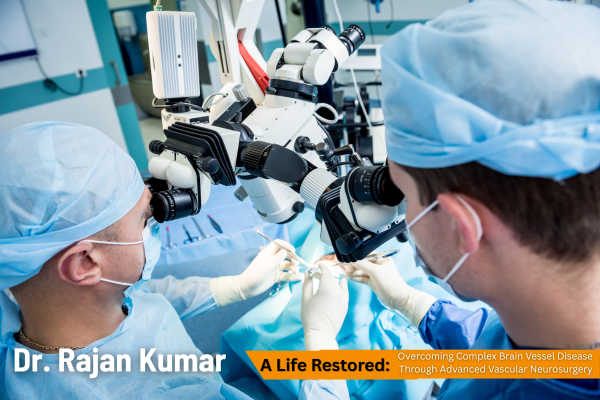
Introduction: When a Sudden Collapse Changed Everything
At 52, Mr. Vivek Sharma was living a healthy and active life with his family when he suddenly experienced a severe headache followed by dizziness and weakness on one side of his body.
Within minutes, he collapsed and was rushed to the emergency department. Advanced brain imaging revealed a serious neurovascular condition involving abnormal blood vessels in the brain requiring immediate specialized care.
The diagnosis came as a devastating shock to Vivek and his loved ones. Fear, uncertainty, and concerns about survival and brain function quickly overwhelmed the family.
Understanding Vascular Neurosurgery
Vascular Neurosurgery focuses on the diagnosis and treatment of diseases affecting blood vessels in the brain and spinal cord.
These conditions can include:
- Brain aneurysms
- Arteriovenous malformations (AVMs)
- Brain hemorrhage
- Stroke-related vascular abnormalities
- Blood vessel blockages or malformations
Many neurovascular conditions are potentially life-threatening and require urgent specialist treatment.
Common Symptoms of Neurovascular Disorders
Brain blood vessel conditions may develop suddenly or gradually over time.
Common warning signs include:
- Sudden severe headache
- Weakness or numbness
- Difficulty speaking
- Blurred or double vision
- Dizziness or loss of balance
- Seizures
- Sudden collapse or unconsciousness
Early diagnosis and immediate neurological care are extremely important to reduce the risk of permanent brain damage.
Emotional and Physical Challenges After Diagnosis
For Vivek and his family, the diagnosis created intense emotional stress.
They struggled with:
- Fear of brain surgery and neurological complications
- Anxiety about paralysis or stroke
- Emotional trauma and uncertainty
- Concerns regarding memory, speech, and movement
- Fear of losing independence and quality of life
Like many neurosurgical patients, Vivek needed not only advanced medical care but also emotional reassurance and hope.
Expert Consultation with Dr Rajan Kumar
Seeking specialized neurological treatment, Vivek consulted Dr Rajan Kumar, a Consultant Brain & Spine Surgeon experienced in advanced vascular neurosurgery procedures.
After detailed MRI scans, angiography, and neurological evaluations, Dr. Kumar carefully explained the condition and recommended urgent neurovascular intervention to prevent life-threatening complications.
His calm communication, precise treatment planning, and compassionate approach gave the family confidence during one of the most difficult periods of their lives.
Advanced Treatment Through Vascular Neurosurgery
Modern Vascular Neurosurgery now offers highly sophisticated techniques for treating complex brain vessel disorders safely and effectively.
Treatment options may include:
- Microsurgical aneurysm clipping
- Neurovascular reconstruction procedures
- Brain hemorrhage management
- Minimally invasive neurovascular interventions
- Advanced brain imaging-guided surgery
- Intensive neurological monitoring and rehabilitation
Dr. Kumar designed a personalized treatment plan focused on protecting brain function, stabilizing the vascular condition, and supporting long-term recovery.
Why Early Neurosurgical Treatment Matters
Delayed treatment of neurovascular disorders can lead to serious complications including stroke, brain damage, disability, or death.
Early intervention helps:
- Prevent brain hemorrhage and stroke
- Reduce neurological complications
- Preserve memory, speech, and movement
- Improve recovery outcomes
- Increase long-term survival and independence
Modern neurosurgical technology now allows safer and more precise treatment than ever before.
Recovery Journey: Rebuilding Strength and Confidence
The recovery process required neurological rehabilitation, patience, and strong family support.
Key milestones during Vivek’s recovery included:
- Stabilization of neurological symptoms
- Gradual improvement in speech and movement
- Better balance and physical coordination
- Increased emotional confidence and independence
- Return to daily activities with medical guidance
With regular follow-up care and rehabilitation support, he steadily regained strength and mobility.
Final Outcome: A New Beginning After a Life-Threatening Condition
Today, Vivek Sharma is living a healthier and more positive life after successful vascular neurosurgery treatment.
He now values every moment with gratitude and encourages others never to ignore neurological warning signs such as severe headaches, weakness, or sudden speech problems. His journey reflects how timely diagnosis, advanced vascular neurosurgery, and expert neurological care can truly save lives.
Frequently Asked Questions (FAQ): Vascular Neurosurgery
What is vascular neurosurgery?
Vascular Neurosurgery is a specialized field focused on treating disorders affecting blood vessels in the brain and spinal cord.
What conditions require vascular neurosurgery?
Conditions such as brain aneurysms, AVMs, brain hemorrhage, and certain stroke-related vascular abnormalities may require treatment.
What are the warning signs of brain vascular problems?
Severe headache, weakness, dizziness, speech difficulty, vision problems, seizures, or sudden collapse may indicate serious neurological conditions.
Is vascular neurosurgery safe?
Modern neurosurgical techniques and imaging technology have significantly improved the safety and precision of vascular brain surgery.
When should I consult a neurosurgeon?
Immediate medical attention is important if neurological symptoms appear suddenly or worsen rapidly.
Conclusion: Advanced Neurovascular Care Can Save Lives and Restore Hope
Complex brain vessel disorders can feel frightening and life-threatening, but modern vascular neurosurgery now offers highly advanced treatment solutions with improved recovery outcomes.
Under the expert supervision of Dr Rajan Kumar, patients receive personalized neurological care focused on protecting brain function, restoring independence, and improving long-term quality of life.
Vivek’s story is a powerful reminder that early diagnosis, expert neurovascular treatment, and compassionate rehabilitation support can help patients overcome even the most serious neurological conditions and move forward with strength, confidence, and hope.